Mobile phone: 18815239758 (same as WeChat)
Phone: 0576-89881178
Phone: 0576-89825885


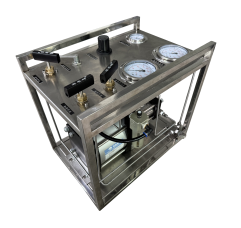
The airtightness testing equipment is mainly used to test the sealing performance of the tested piece. According to the volume and pressure of the tested piece and the requirements for gas, it can be divided into airtightness testing instruments and airtightness testing equipment.
Airtightness tester: mainly suitable for low-pressure sealing testing of packaging bags, bottles, tube boxes, etc. in the food, pharmaceutical and other industries. The airtightness tester is connected to a testing room and specially designed to accommodate the packaging that needs to be tested.
Mainly based on the changes in vacuum and relative vacuum, there are hidden leaks and defects in the packaging.
Airtightness testing equipment: mainly suitable for testing containers with various requirements for low to high pressure non corrosive gases. It is mainly divided into two testing methods: bubble detection method and pressure drop detection method.
1. Bubble detection method: Firstly, Feentor Company uses a gas booster pump to increase the pressure of the detected pressure to meet the pressure requirements for airtightness detection. Then, a pressure reducing valve is used to reduce the pressure to various usage pressure requirements. If the pressure requirements are strict, high-precision pressure gauges will be used. The gas pressure enters the tested part through the high-pressure pipeline, shut-off valve, and pressure gauge. After completing the above conditions, place the tested part in clean water and check for any bubbles or leaks. Advantages: It can intuitively detect leakage points, disadvantages: It is only suitable for detecting water containers without fear of water. Bubble airtightness testing equipment is divided into manual airtightness testing equipment (fully manually controlled), PLC airtightness testing equipment (can set holding time, upper and lower line pressure, qualified and unqualified alarms, after one setting, subsequent only need to connect the testing piece and click the switch), computer airtightness testing equipment (this equipment has PLC functions such as printing testing reports, container segmented pressure testing, real-time monitoring, automatic storage, etc.).
2. Pressure drop detection method: The difference between the airtightness pressure drop detection method and the airtightness bubble detection method is that the pressure drop detection method does not need to be placed in water, but injects high-pressure gas into the airtight container being tested and seals it by checking whether the pressure drops. Advantages: No need to put it in water, suitable for airtightness testing of various containers. Disadvantages: The leakage point cannot be observed intuitively, and the pressure drop is not significant when the container is too large. The pressure drop airtightness testing equipment is also divided into manual airtightness testing equipment, PLC airtightness testing equipment, and computer version airtightness testing equipment (with the same function as bubble detection equipment).