
Mobile phone: 18815239758 (same as WeChat)
Phone: 0576-89881178
Phone: 0576-89825885


Bolt hydraulic tensioner, also known as bolt tensioner or hydraulic tensioner, uses a hydraulic pressure source provided by a hydraulic booster pump (high-pressure hydraulic pump) to determine the tensile force based on the tensile strength, yield coefficient, and elongation of the material. Using the tensile force generated by the high-pressure oil pump, the bolt under force is stretched in its elastic deformation zone, causing slight deformation of the bolt diameter and making the nut easy to loosen. In addition, it can also be used as a device for hydraulic interference fit connection to apply axial force for top pressure installation. The advantage of a large tensioner is that it allows multiple bolts to be tightened and removed at the same time, with uniform force distribution. It is a quick tool and a way to tighten and remove bolts of various specifications. Applied in fields such as petrochemicals, nuclear power, wind power, hydropower, thermal power, ships, railways, aerospace, mining, heavy machinery, etc. According to different working conditions, application conditions, and user requirements, special tensioner designs can be made.
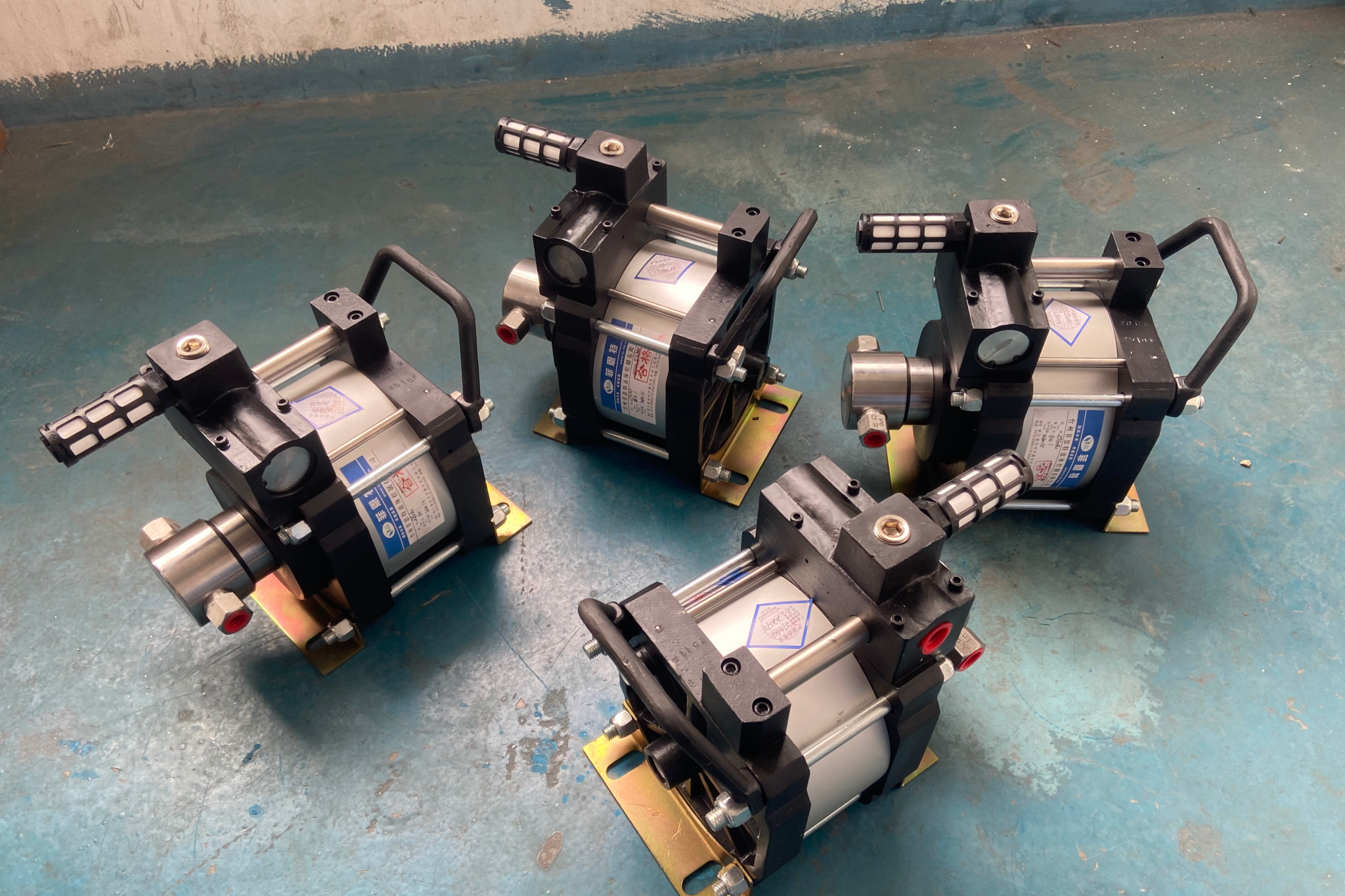
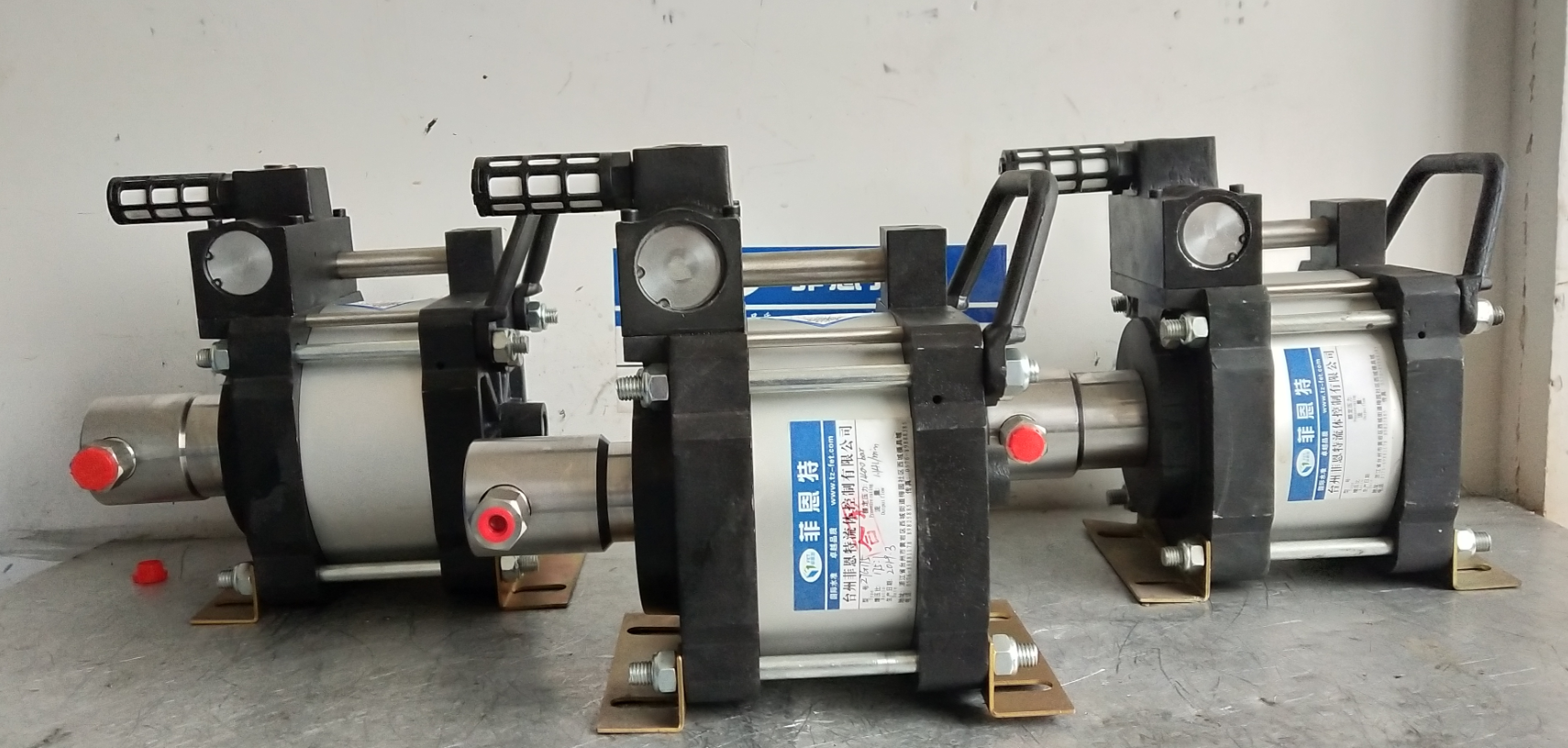 Liquid booster
Principle
A bolt tensioner generally consists of a hydraulic pump, a high-pressure hose, a pressure gauge, and a stretching body. The hydraulic pump is the power source, and the pressure gauge reflects the output pressure of the pump. The high-pressure hose connects the hydraulic pump and the stretching body. Stretching body is the executing element that achieves bolt stretching. It is mainly composed of a piston cylinder, a piston, a support bridge, and a tension nut. When the structure of the bolt tensioner is working, the high-pressure oil output from the power source is transported to piston cylinder 3 through a high-pressure hose. Under the pressure, the piston in the piston cylinder moves upward, driving the tension nut to move upward. The tension nut is connected to the working bolt thread to elongate the working bolt to the required deformation, which is controlled within the elastic deformation range. Then, pre tightening or dismantling operations are carried out, and the working bolt is restored to its original shape through hydraulic or mechanical return, completing the operation.
characteristics
The bolt tensioner uses pure tensile force to directly elongate the bolt, without torsional shear force or lateral force, and has no frictional damage to the contact surface of the connection. It is a method of controlling the pre tightening force of the bolt. Compared to hydraulic torque wrenches, the advantages of bolt tensioners are rapid response, no torsional stress, no frictional damage, and the ability to simultaneously pre tighten multiple bolts; Therefore, bolt tensioners are more widely used in situations where pre tightening force is strictly required. The disadvantage is that it requires sufficient elongation, which greatly limits its use in narrow axial spaces.
Classification
There are four main types of hydraulic tensioners: ordinary universal type, interchangeable stretching head type, unipolar reset type, and bipolar reset type.
The working pressure of the four types of hydraulic tensioners is 150Mpa.
1. The regular type is suitable for stretching single specification bolts, with light weight and high precision. Small size and compact structure;
2. The interchangeable type of stretching head has strong universality and can be used for stretching multiple specifications of bolts by replacing the stretching head;
3. Single stage reset type piston automatic reset design, suitable for frequent use;
4. Bipolar reset type dual cylinder design, suitable for working conditions with limited space.
Use
Bolt tensioners can be used individually or in groups. Multiple tensioners are used in parallel, which not only ensures but also guarantees the uniformity of force on multiple bolts. This is particularly important in high-pressure sealed flange connections. When the bolt spacing is small and the radial size is limited, a two-stage structure can also be used, sacrificing axial size to ensure radial size. When the outer diameter remains constant, doubling the effective area of the piston produces twice the force. With the support of materials and sealing technology, the output pressure of the pump can also be increased to increase the tension of the tensioner, in order to meet the constantly developing requirements for high-strength and high torque bolt operations. Currently, developing specialized bolt tensioners for specific equipment based on requirements is a trend. The STR series hydraulic tensioner developed for the 280B diesel engine used in the freight locomotive Dongfeng 8B is widely used in locomotive depots such as Shanghai, Urumqi, and Korla. For example, the special tensioner developed for the M100 bolt of Shagang Group's continuous casting machine can achieve a lifting force of up to 500t, solving the difficulties in bolt assembly for the user unit.
Precautions
Bolt tensioners belong to high-pressure products and should be used correctly, otherwise they may not achieve the expected effect and may even pose a danger.
(1) Before use, the oil pressure must be calculated to avoid excessive working pressure and the bearing capacity of the bolt, which may cause plastic deformation and damage to the bolt. The tensile force generated by the bolt tensioner is equal to the product of the output pressure of the power source and the effective area of the piston. Therefore, the allowable stress can be calculated based on the strength grade of the bolts used, in order to reverse calculate the output pressure of the pump. Ensure that the deformation of the bolt is within the elastic deformation range and complete the work without damaging the bolt.
(2) During the pressurization process, it is advisable to apply pressure as evenly as possible. Every time a certain amount of pressure is increased, it should be stabilized before increasing again to avoid excessive impact tension that affects the pre tightening effect of the bolt.
(3) During the stretching process, attention should be paid to the design stroke of the tensioner. Excessive travel can result in minor damage to the seals and severe accidents. Generally, stretchers have a large stroke warning line, requiring users to pay attention to the large stroke at all times during use.
(4) When using a tensioner to remove bolts, after tightening the tension nut, it should be loosened by about 3/4 of a circle to avoid tightening the tension nut on the piston when the bolt is elastically reset. When pre tightening bolts, there is no such problem, and this force is mainly borne by the working nut rather than the tension nut.
(5) When pre tightening multiple bolts step by step, in order to reduce the influence between bolts pre tightened in different steps, the sequence and tensile force of bolt pre tightening should be arranged reasonably. Generally, the order should be arranged according to the principle of symmetry. For example, when pre tightening a flange with 8 bolts using a single tensioner, the control of tensile force for each step is more complex because the bolts that are pre tightened later in the flange as shown in the figure above will definitely have an impact on the ones that are pre tightened first.
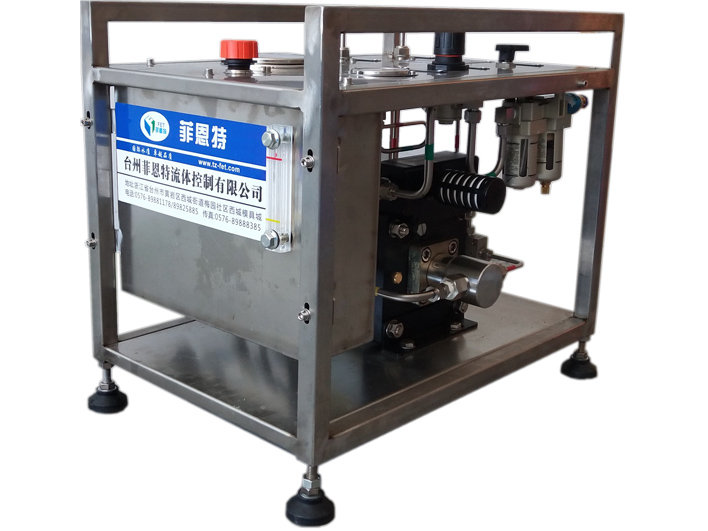 Pneumatic liquid booster pump
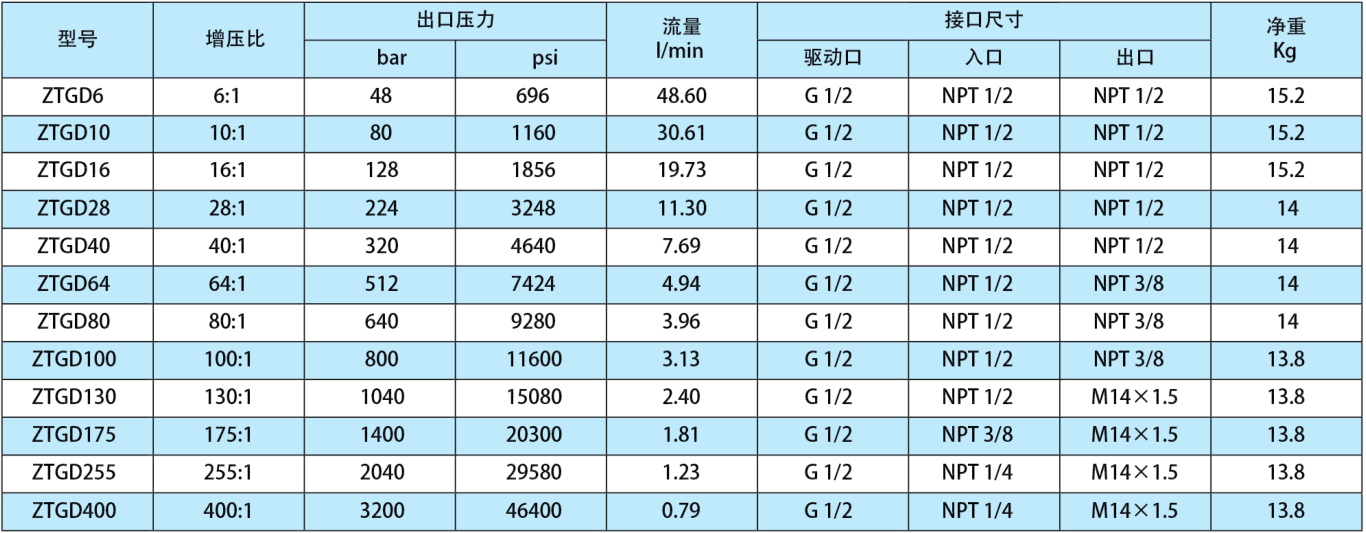 Parameters of liquid booster pump
Legal statement: The above content belongs to the copyright of Taizhou Feentor - Plagiarism will be prosecuted
