
Mobile phone: 18815239758 (same as WeChat)
Phone: 0576-89881178
Phone: 0576-89825885


The normal operating temperature of high-pressure pneumatic gas booster pump will be briefly introduced by the pneumatic gas booster pump editor.
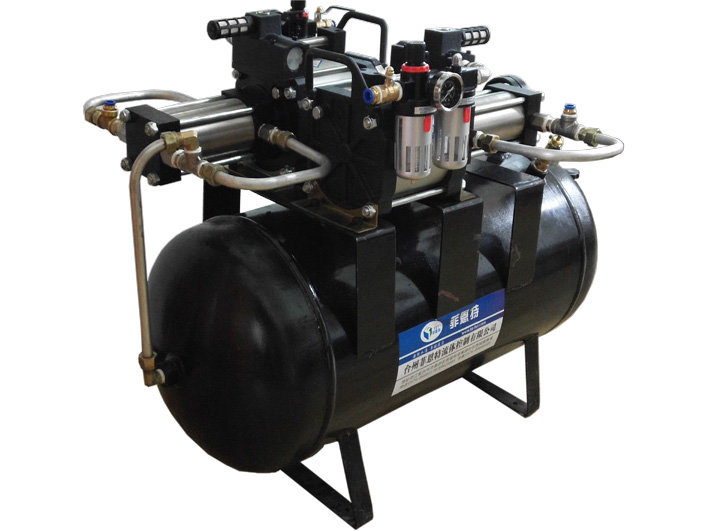
Let's first understand the structure of a high-pressure pneumatic gas booster pump. The Feentor pneumatic gas booster pump is composed of an air driven reciprocating large-area piston directly connected to a connecting rod and a small area gas piston. Each gas chamber end cap contains an output and input one-way valve, and the air drive section includes a circulation shaft and a guide valve. When the gas is driven by humans, both provide continuous reciprocating motion. The connection between the gas compression chamber and the air drive chamber in the high-pressure pneumatic booster pump is provided with a three-stage dynamic sealing device. The part between the two chambers is connected to the air. This design ensures that the pressurized gas is not contaminated by the driving gas.
The Feentor high-pressure pneumatic gas booster pump fully utilizes the driving gas during reciprocating operation, and uses the discharged low-temperature driving gas as a coolant to pass through the cooling pipe of the pneumatic gas booster pump, which is used to cool the high-pressure output gas and the cylinder liner of the pneumatic gas booster pump. This approach not only ensures that the temperature of the high-pressure output gas and booster pump is around 20 degrees. The high-pressure pneumatic gas booster pump is also affected by indoor and outdoor temperatures, avoiding outdoor high temperature exposure or indoor high temperature areas. The reliable operating temperature range of the standard air drive section is between -4 ° C and 65 ° C. Too low a temperature will increase the amount of air or gas leakage and reduce work efficiency: too high a temperature will reduce the lifespan of seals.
Summary: It is normal for the temperature of a high-pressure pneumatic gas booster pump to be between -4 ° C and 65 ° C during operation. Is it affected by external factors when the temperature is too low or too high? If it is not affected by external factors, it is due to internal problems such as aging of the sealing ring and increased frictional resistance caused by unclean gas in the high-pressure pneumatic booster pump.
Legal statement: The above content belongs to the copyright of Taizhou Feentor - Plagiarism will be prosecuted
