
Mobile phone: 18815239758 (same as WeChat)
Phone: 0576-89881178
Phone: 0576-89825885


The use of pneumatic booster pumps has made industrial production increasingly convenient. So, what about understanding gas booster pumps?
In the 1960s, the production and research of gas booster pumps began in Europe, and the development of pneumatic pumps in China only had a history of 20 years. Gas booster pumps and liquid booster pumps are both forms of pneumatic booster pumps. The principle of the Feentor brand gas booster pump is basically driven by a large area piston, and the high pressure of the pressure difference stroke of the small area high-pressure piston is controlled by a directional valve to achieve the reciprocating motion of the pump. It is also known as a reciprocating booster pump, which is produced by the action of a large area of compressed gas on a small area high-pressure plunger according to the compression ratio. The driving cylinder and the boosting cylinder are separated to ensure the purity of the boosted gas and prevent contamination, which is also a major advantage of the pump
Gas booster pumps are suitable for various media,
For example, natural gas, methane, nitrogen, argon, neon, helium, carbon dioxide, oxygen, and other inert gases. If the gas is corrosive, it needs to be explained in advance with the Feentor manufacturer.
What are the characteristics of gas booster pumps reflected in:
1. Small size, light weight, easy to carry, suitable for field operations.
2. Low energy consumption, no need for electricity, no spark or arc generation, can be used in hazardous areas.
3. What are the types of boost ratios and a wide range of pressures? Customers can choose according to the required pressure.
4. Automatic pressure compensation. When the air pressure is lower than the set pressure, the booster pump will automatically start pressure compensation until it reaches a constant pressure, and then repeat this process. Once the pressure is reached, energy consumption will no longer be consumed.
5. Easy to control, connect the drive port, then connect the pressurized gas, high-pressure gas output, simple operation
Typical applications of gas booster pumps: airtight sealing test, air pressure testing, fluid pressure detection, chemical reaction of high-pressure reaction vessels. In the industrial field, they are used for pneumatic chuck clamping, accumulator inflation, high-pressure bottle inflation in machine tools, and converting low-pressure gas into high-pressure gas. Choosing a Feentor gas booster pump is a wise choice when everything requires local high-pressure gas.
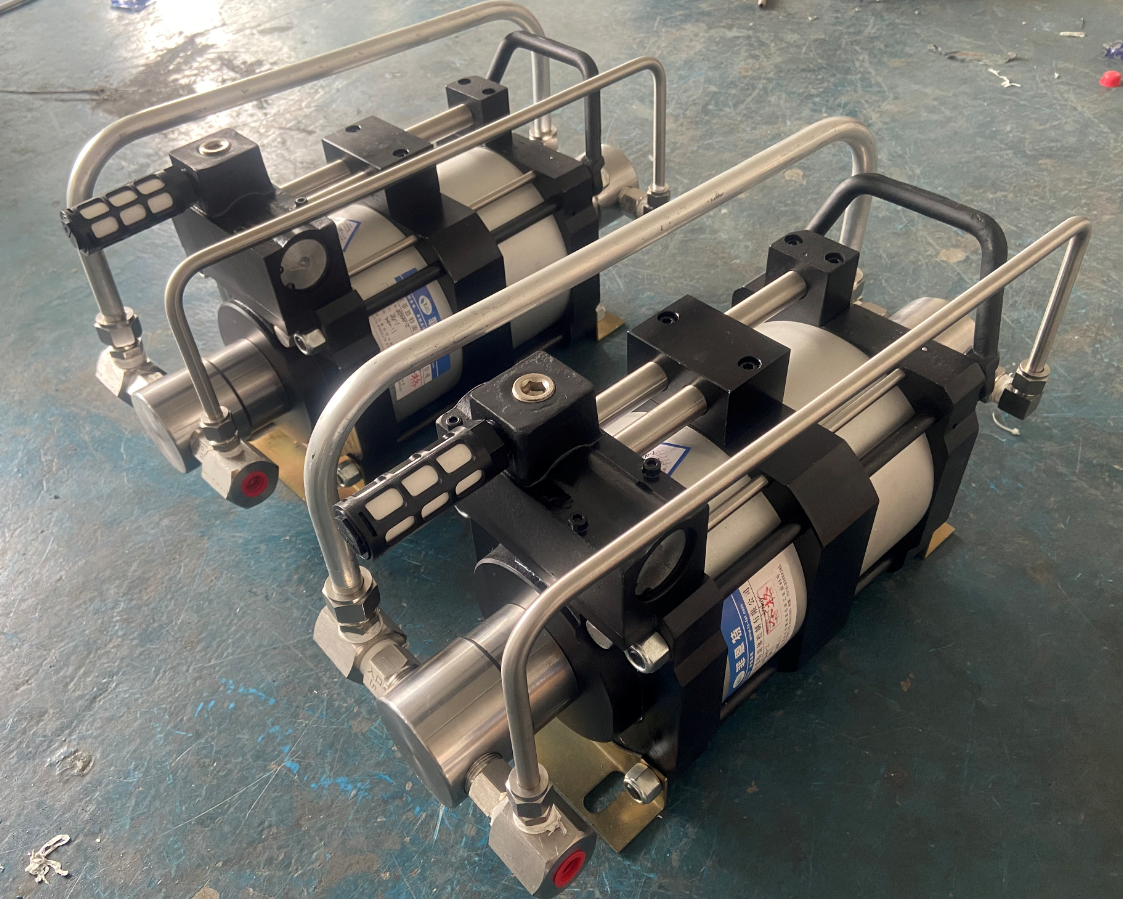
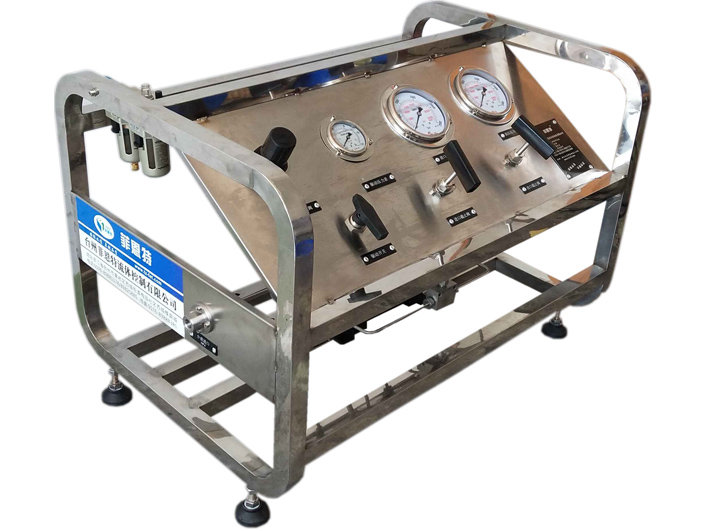 Gas booster pump
