
Mobile phone: 18815239758 (same as WeChat)
Phone: 0576-89881178
Phone: 0576-89825885


What should I do if the high-pressure cylinder body of the gas booster pump heats up during operation?
Due to the convenience brought to customers by pneumatic gas booster pumps, more and more customers are starting to use such products. However, some customers have reported that the high-pressure chamber of the pump may become hot during operation, and they are concerned about potential safety hazards. Today, the editor will analyze the situation based on customer feedback.
Firstly, the booster pump itself has a self cooling cooling pipeline. During the operation of the high-pressure chamber of the booster pump, it is necessary to check whether the pump works too frequently. If the booster pump works too frequently, it is recommended that customers check whether their pump displacement is too small. A major characteristic of a gas booster pump is that it stops working when the high-pressure output pressure of the pump is a certain multiple of the driving pressure.
In addition, if the high-pressure chamber of the pump is severely heated, it is also necessary to check whether the pressurized medium is clean and free of impurities. If small particles of impurities enter the pump after lifting, the reciprocating motion between the piston seal and the cylinder body will increase the working resistance of the pump body, resulting in serious heating phenomenon.
In addition to the above two points, customers who use Feentor gas booster pumps can also observe the one-way valves at both ends of the pump body. If the temperature difference between the outlet one-way valve and the high-pressure cylinder body is not significant, and the temperature of the inlet one-way valve is the same as the temperature of the medium, then the booster pump is generally in the process of boosting, and gas compression and temperature rise are normal. When the pressure reaches the proportion, the working frequency of the pump will decrease. Coupled with the self cooling characteristics of the pump, the temperature will slowly decrease.
However, it should be noted that the temperature of the inlet check valve of the booster pump generally does not increase. If a serious temperature increase is found in the inlet check valve, please be sure to check whether there are impurities in the inlet check valve. At this time, the pneumatic booster pump may experience slow pressure rise or failure to increase pressure, which needs to be eliminated as soon as possible.
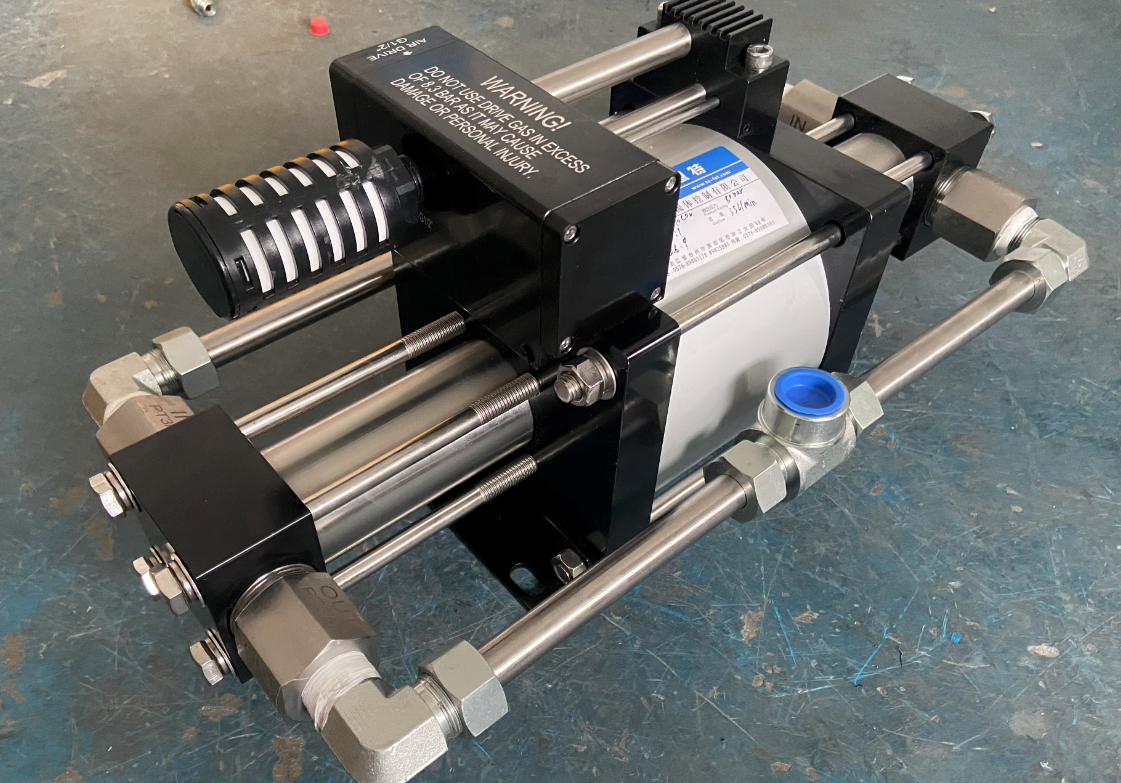 Gas booster pump
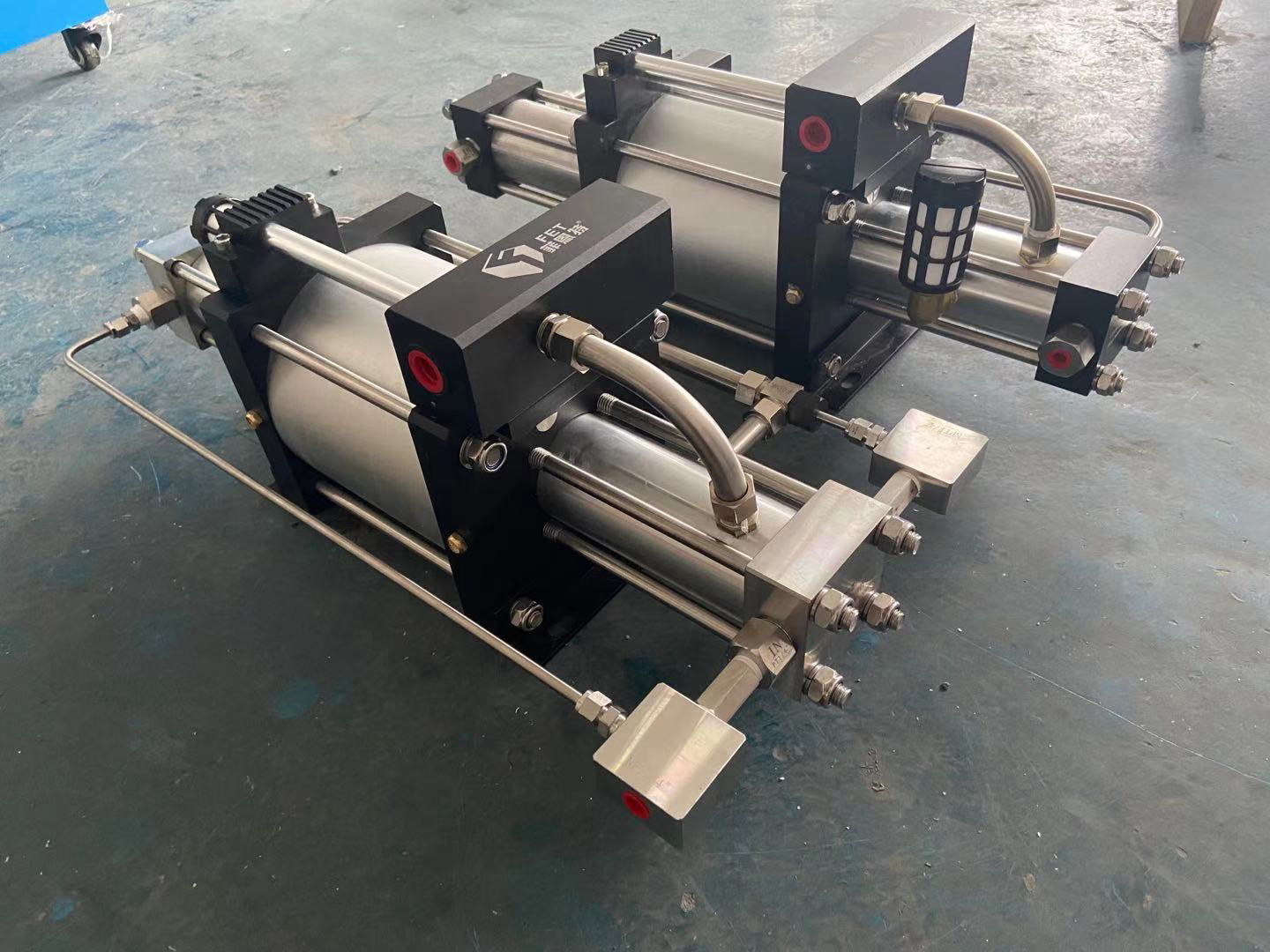 Gas booster pump cooling
