
Mobile phone: 18815239758 (same as WeChat)
Phone: 0576-89881178
Phone: 0576-89825885


Principle of air booster pump
Pneumatic booster pump is composed of a structure where a large area driving piston and a small area boosting piston are connected together. The pressure ratio is generated by the area ratio of the two pistons, such as 2:1, 5:1.. 100:1, etc.
The pressure used by the output press can be calculated through the boost ratio. When the air booster pump is working, the large piston driven by it moves in the opposite direction to the boost piston, and the inlet check valve opens and the outlet check valve closes, sucking in the boosted medium. When the piston moves in reverse, the outlet one-way valve opens and the inlet one-way valve closes, outputting the pressurized medium.
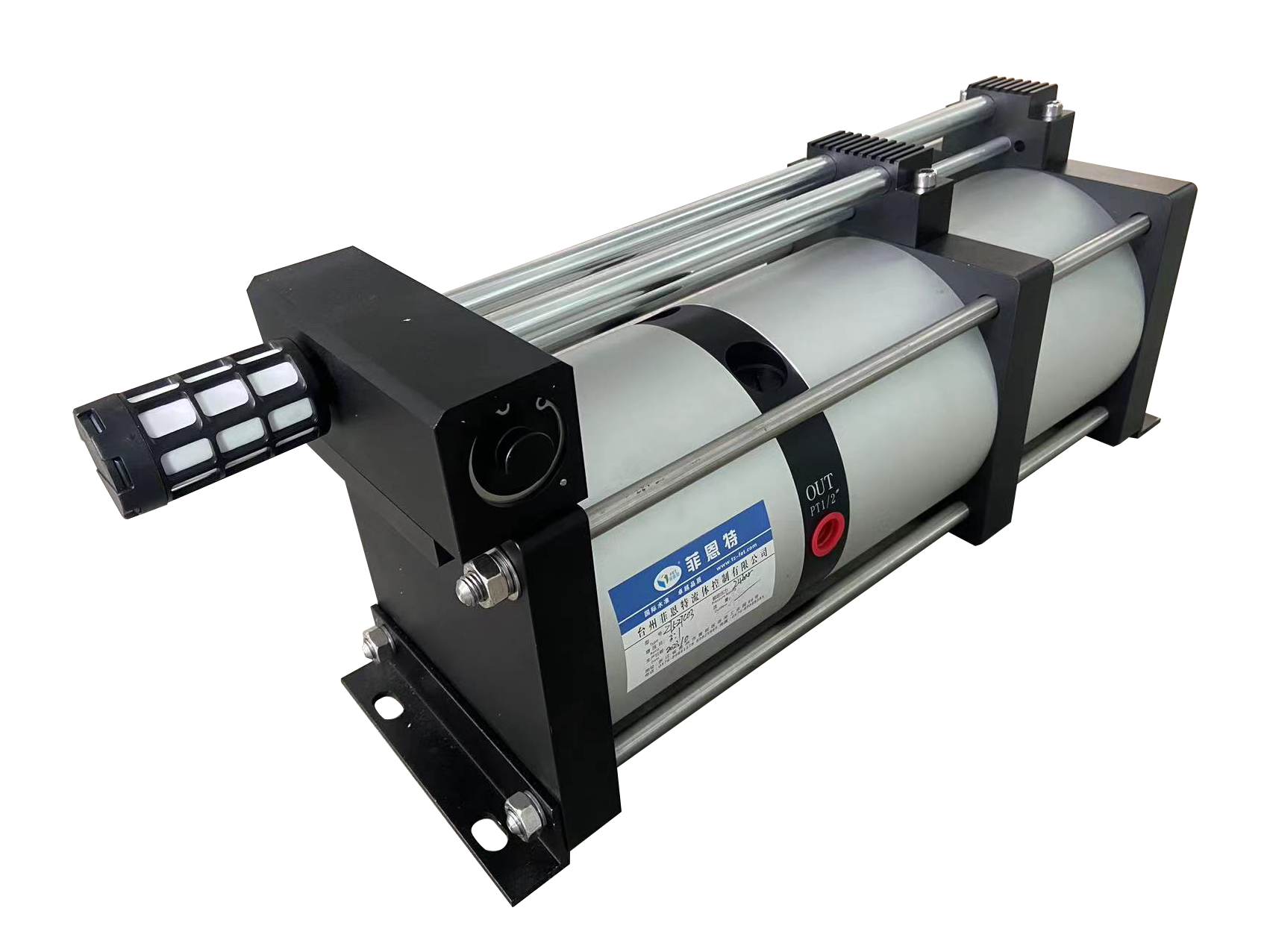
The pneumatic air booster pump achieves reciprocating continuous operation of the pump through a two position four-way control valve and a two position two-way pilot valve. Two position two-way pilot valves control the valve core and body. The pilot valve is controlled by a large piston driven by air. The pilot valve continuously replenishes and exhausts the gas inside the control valve body, allowing the driving gas to alternately act on the bottom, top, and surface of the piston. Furthermore, the reciprocating continuous operation of the air booster pump can be achieved.

The above content belongs to the copyright of Taizhou Feentor - Plagiarism will be prosecuted
