
Mobile phone: 18815239758 (same as WeChat)
Phone: 0576-89881178
Phone: 0576-89825885


How to classify pneumatic gas booster pumps
There are various classifications of pneumatic gas booster pumps in China, and too many classifications have caused difficulties for customers in choosing. However, each classification has its own effectiveness. Below, I will briefly explain the current classification situation and general uses in China. At present, domestic pneumatic gas booster pumps can be roughly divided into the following situations. 1: Classification of cylinder diameter sizes. 2: Divided by pressurized medium. 3: How much traffic is divided. 4: The initial pressure level of the pressurized medium is divided.
1: Divided by cylinder diameter size.
Divided into sizes such as 100 cylinder diameter, 120 cylinder diameter, 160 cylinder diameter, etc. Small cylinder diameter is suitable for testing sites, with characteristics such as small volume and easy mobility. Larger cylinder diameters have the advantage of higher flow rates.
2: Divided by the properties of the boosting medium.
According to the properties of the boosting medium, it can be divided into ordinary boosting pumps and specialized boosting pumps. For non corrosive gases such as air, nitrogen, argon, and other media without special properties, ordinary pneumatic gas boosting pumps can be used for boosting. Gases containing special properties such as oxygen and carbon dioxide require specialized pneumatic gas booster pumps (oxygen has higher oxidation ability, and specialized pumps are more resistant to oxidation. Carbon dioxide forms low temperatures when circulating, and their specialized booster pumps have low temperature resistance and antifreeze functions. The accessories of the booster pump are also different for each special medium with different properties).
3: How much traffic is divided.
The division of flow rate, flow rate, cylinder diameter, piston stroke, and single/double action are related. The larger the booster pump, the larger the diameter of the booster cylinder, and the larger the suction volume (and the amount of boost output). The longer the piston stroke, the greater the suction volume per stroke. When the same cylinder diameter and piston stroke are used, the distinction should be made based on single and double acting. Single acting means that the booster pump works back and forth, and the pressurized medium is pressurized once and for all. Double acting means twice the flow, so the traffic is twice that of single acting.
4: The initial pressure level of the pressurized medium is divided.
The initial pressure of the pressurized medium varies from high to low, and the range of pressurization is also different. In this case, a first stage booster pump or a second stage booster pump will be used. The first stage booster pump can boost low pressure to medium pressure or medium pressure to high pressure, but it cannot directly boost low pressure to high pressure. The secondary booster pump can directly boost extremely low pressure to high pressure.
When choosing a pneumatic gas booster pump, it is important to consider the on-site working conditions and actual usage, and consult with Feentor sales engineers for detailed selection to prevent purchasing errors. No matter how the pneumatic gas booster pump is classified, it should be determined according to the demand.
Taizhou Feentor Fluid Co., Ltd. is a professional manufacturer of various non-standard fluid control systems. Its main products include pneumatic pneumatic booster pumps, pneumatic liquid booster pumps, various specialized booster pumps, pressure vessel explosion test benches, pressure pulse test benches, CNG vehicle modification airtightness test devices, and natural gas cylinder detection equipment. Stamping equipment includes bolt and nut press fitting machines, rivet free connection machines, etc. The products are widely used in the pneumatic hydraulic industry, machine tool industry, diesel engine industry, aerospace industry, automobile manufacturing industry, household appliances, industrial appliances industry, petrochemical industry, CNG vehicle modification industry, pressure testing industry, as well as steel, power, metallurgy, textile, electronics, mining, light industry, machinery manufacturing, paper and printing, transportation facilities, food and medicine, casting and spraying, maritime terminals, military technology and other fields such as petroleum, aviation, aerospace, military industry, vehicles, fire protection, pressure vessels, pipes and more.
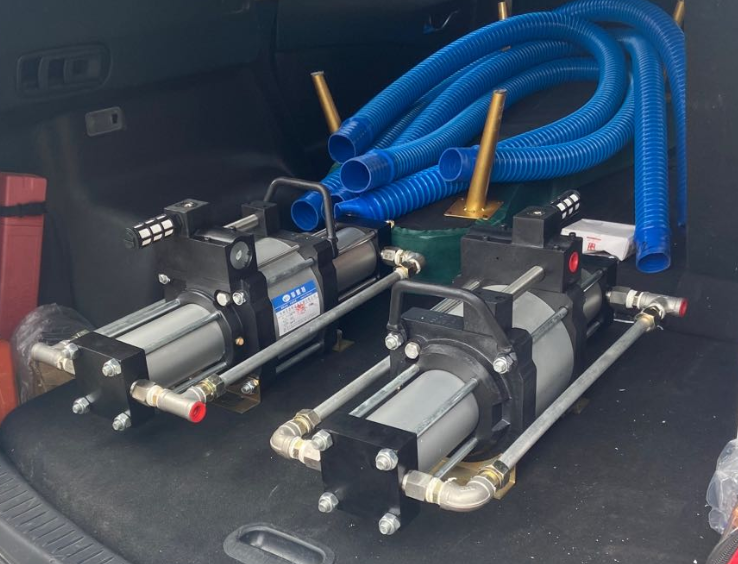 Gas booster pump
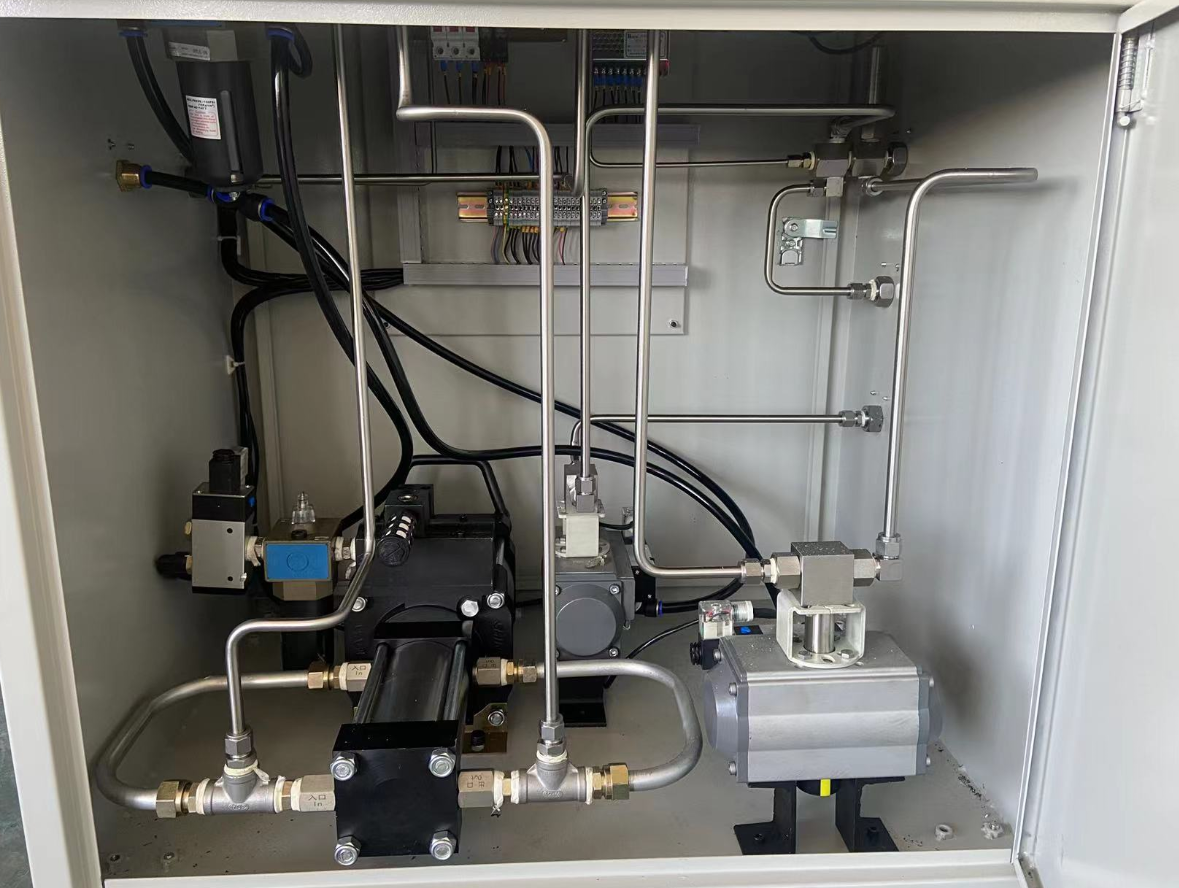 Gas booster pump
