
Mobile phone: 18815239758 (same as WeChat)
Phone: 0576-89881178
Phone: 0576-89825885


Requirements and procedures for airtightness testing
Airtightness test is usually a sealing test that applies gas pressure to a pressure vessel to check for leaks. The pressure vessel must pass the hydraulic test before conducting the airtightness test. During the experiment, it is necessary to conduct the test according to the pressure specified in the design drawings.
Requirements for air tightness test:
1. The air tightness test must be conducted after the hydraulic test is qualified. For pressure vessels, both air tightness test and pressure test can be conducted simultaneously, and the pressure must be the air pressure test pressure (the air pressure test pressure is 1.2 times higher than the sealing test pressure).
2. For pressure vessels made of different materials, the test temperature should also be different, and the test should be conducted according to the design drawings.
3. Due to the use of different media, inert gases can also be used for various test media in pressure vessels for airtightness testing.
4. During the airtightness test, the pressure should rise steadily until it reaches the test pressure. Then, according to the design drawings, the pressure should be held in sections for a corresponding period of time to check whether it is qualified.
Airtightness test procedure:
Firstly, confirm that the container being tested has undergone a water pressure test.
2. Check if the link to the tested item is not tightly sealed.
3. Confirm the testing medium and pressure of the tested item.
4. Slowly inject the detection gas to the set pressure on the drawing for pressure holding test.
5. When the holding time is reached, check for pressure drop or brush the detection liquid to see if there is any bubbling.
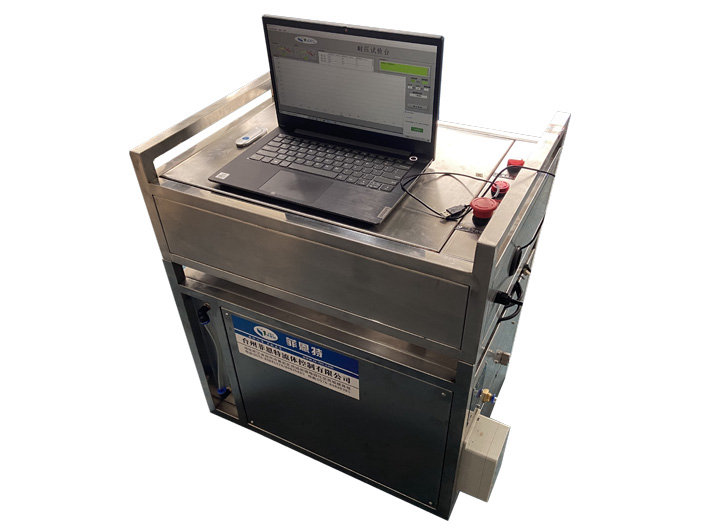 气密性试验台
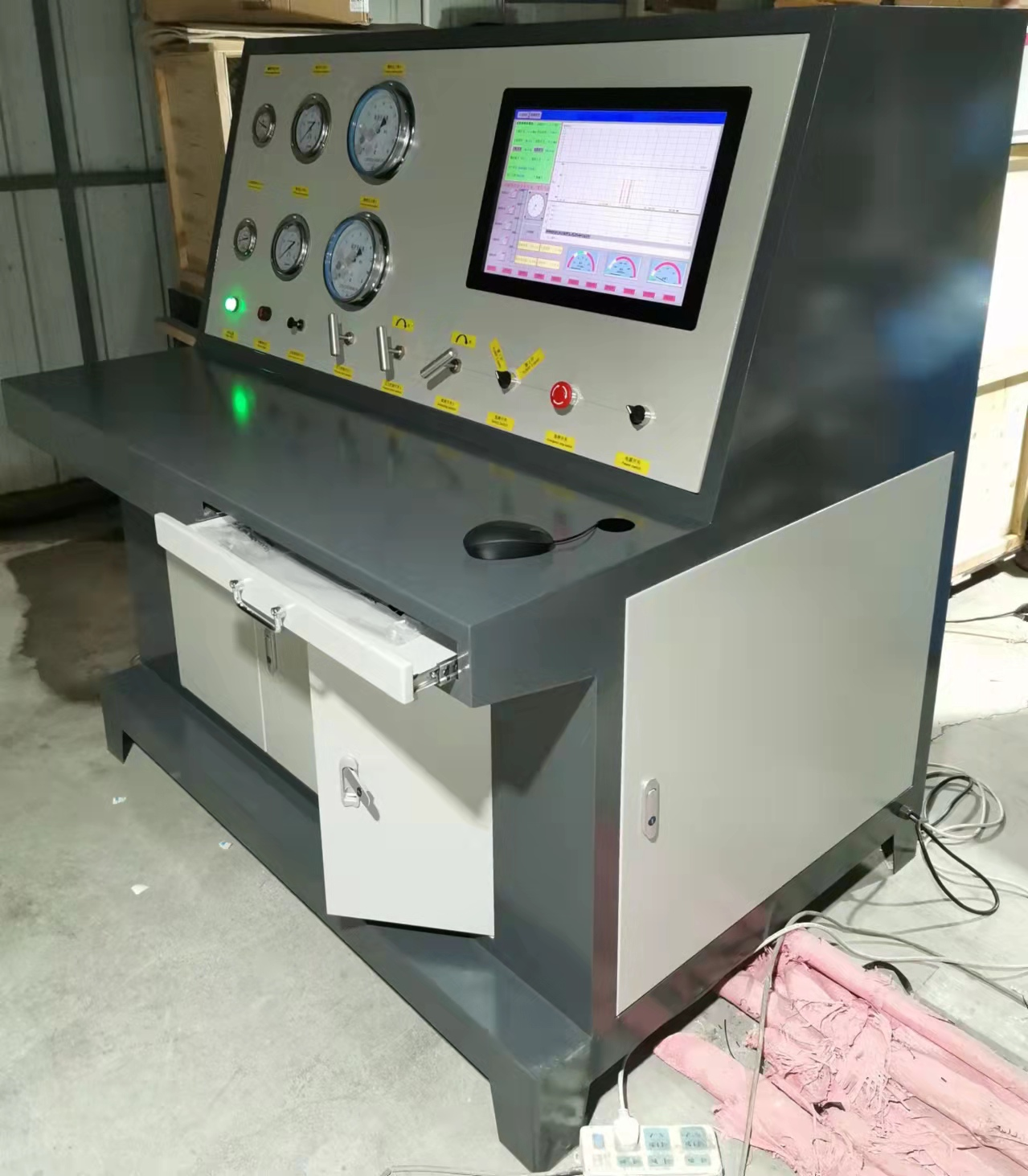 Airtight sealing test bench
